As the sweltering heat of summer begins to gradually fade, a familiar, refreshing crispness slowly creeps into the evening air. For homeowners, this subtle drop in temperature is a welcome sign. It signals the transition into fall and the inevitable, rapid approach of winter. This is the time of year when we start pulling cozy sweaters out of storage, swapping out lightweight summer bedding for heavier, warmer quilts, and looking forward to relaxing evenings spent lounging by a roaring fire.
However, before you strike that first match, gather your kindling, or simply flip the switch on your modern heating appliance, there is a crucial home maintenance step you simply cannot afford to skip: scheduling a professional chimney inspection.
Far too many homeowners wait until the first true cold snap hits to even think about their fireplace. We understand the logic: out of sight, out of mind. But being proactive and having a certified professional examine your venting system in the early fall, or even late summer, can save you significant time, money, and stress. At Southern Chimneys, we have seen firsthand the disastrous, and often expensive, consequences of delayed maintenance. By the time frost covers the ground, a minor structural issue could easily evolve into a major household hazard.
The Hidden Dangers of Creosote and Soot Buildup
When you burn natural wood in your fireplace, complex combustion byproducts travel up your flue. These byproducts are a heavy mixture of smoke, water vapor, unburned wood particles, hydrocarbon volatiles, and various minerals. As this warm, buoyant exhaust rises and eventually hits the cooler masonry or metal lining of your upper flue, rapid condensation occurs, leaving behind a highly flammable residue known as creosote.
If dangerous creosote sits in your flue all summer, it hardens and bakes into the lining, making it incredibly difficult to remove and exponentially increasing your risk of a sudden flue fire. Creosote develops across three distinct stages:
| Creosote Stage / Element | Texture & Characteristics | Removal & Maintenance Notes | Fire Hazard Level |
| Combustion Byproducts | Heavy mixture of smoke, water vapor, unburned wood particles, and hydrocarbon volatiles | Condenses on cooler upper flue walls to form creosote | Baseline risk |
| Stage 1 Creosote | Light, flaky soot | Easily cleared during standard maintenance | Low |
| Stage 2 Creosote | Crunchy, tar-like substance | Requires specialized scraping tools to remove | Moderate to High |
| Stage 3 Creosote | Dense, shiny glaze that hardens into flue lining over summer | Extremely difficult to extract; requires professional chemical treatment | Severe (Highly Combustible) |
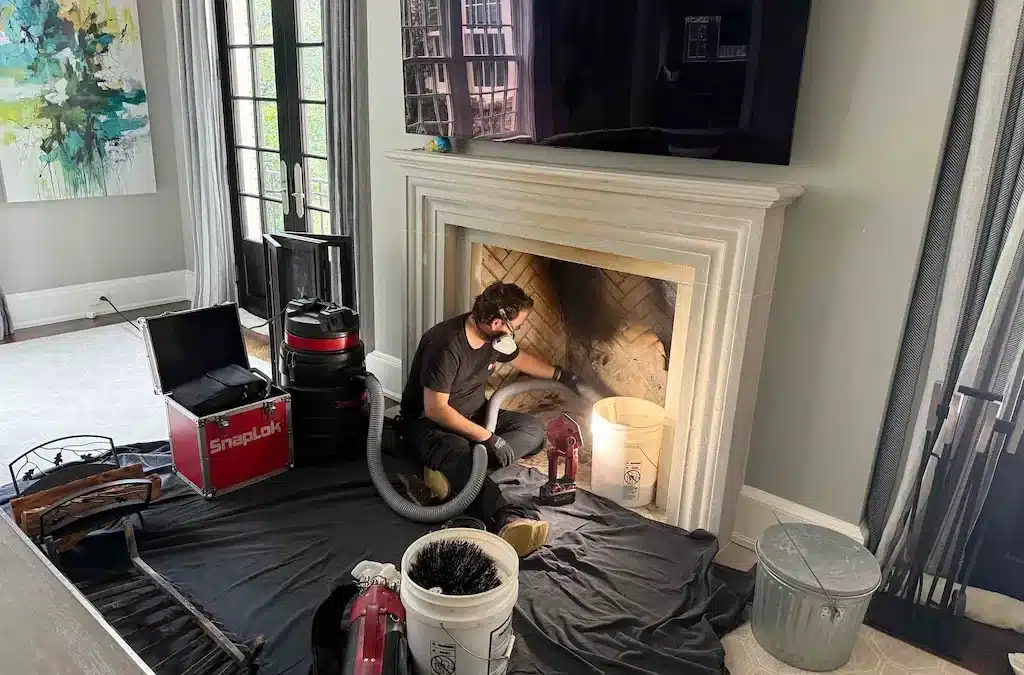
A professional inspection will definitively determine the exact level of buildup present in your system. If specialized sweeping or soot removal is required to extract this hazardous material, getting it done well before you plan to light your first fire of the season keeps your home completely protected.
Clearing Out Unwanted Summer Guests and Debris
During the warmer spring and summer months, your fireplace sits entirely unused. To you, it is merely a dormant heating appliance waiting for winter. However, to a bird, a family of squirrels, or a clever raccoon, it looks like the perfect, hollow, predator-proof sanctuary to build a comfortable nest.
Even if you have a protective cap installed at the top of your flue, severe summer storms can occasionally dislodge or damage it, providing a wide-open invitation for local wildlife to move in. Additionally, powerful winds often blow dry leaves, pine needles, snapped twigs, and other yard debris straight down into the flue cavity.
If you attempt to light a fire with a blocked or partially obstructed flue, the smoke and toxic exhaust gases—including the deadly, odorless carbon monoxide—have nowhere to go but backward. This reverse draft will push smoke and dangerous fumes straight into your living room, potentially ruining your furniture, harming your indoor air quality, and putting your family’s health at risk. A comprehensive visual and physical evaluation ensures the entire internal pathway is completely clear, structurally sound, and perfectly safe for venting.
Identifying Water Damage and Masonry Deterioration
Water is the natural, undisputed enemy of masonry. Over the course of the spring and summer, your home likely endured heavy, driving rains, intense thunderstorms, and high humidity. Bricks and mortar are inherently porous materials, acting much like hard sponges that readily absorb ambient moisture. When water aggressively penetrates these materials, it can cause severe internal and external structural degradation.
If water damage is left unchecked and ignored before winter arrives, the moisture that is deeply trapped inside the bricks will inevitably freeze and expand during a sudden cold snap. This aggressive freeze-thaw cycle causes a highly destructive process known as spalling. When spalling occurs, the outer faces of the bricks physically pop off or flake away, and the mortar joints begin to rapidly crumble and turn to dust.
A meticulous, hands-on evaluation by the experts at Southern Chimneys will successfully identify any early signs of water intrusion or surface deterioration. Whether your system requires concrete crown resurfacing, precise tuckpointing to replace missing mortar, or an industrial-grade waterproofing treatment, catching these issues early prevents massive structural failures. Addressing these concerns proactively ensures you will not be caught off guard or forced into an expensive, large-scale rebuild when freezing temperatures finally arrive.
Ensuring Optimal Draft and Airflow Efficiency
Your fireplace is essentially a highly localized, specialized ventilation system seamlessly integrated into your home. For it to work effectively and safely, it needs to draft properly. A proper draft means the system must smoothly pull ambient air from the room, efficiently fuel the fire, and forcefully carry the dangerous exhaust up and safely out of the house.
Several underlying factors can impede or completely ruin this draft, ranging from a malfunctioning metal damper that is stubbornly stuck closed due to summer rust, to a flue that was improperly sized for the firebox during original construction. The concept known as the ‘stack effect’ dictates how warm air rises and exits the home. Modern, tightly sealed houses can sometimes fight against this natural process, creating negative air pressure that pulls cold air down the flue.
During a pre-season chimney inspection, seasoned technicians will test all mechanical damper mechanisms, meticulously check the internal smoke chamber for jagged edges that disrupt airflow, and carefully evaluate the overall structural dynamics of the fireplace system. A knowledgeable technician can identify pressure imbalances during a routine visit and recommend effective solutions. An efficient draft does much more than just prevent pungent smoke from billowing into your home; it also means your fire will consistently burn hotter, brighter, and much cleaner, maximizing your heating potential.
Comprehensive Care for Gas Systems and Alternative Installations
Whether you have a traditional wood-burning masonry fireplace, a modern pre-fabricated metal system, or a highly convenient gas appliance, strict pre-season inspections are equally important across the board. Many homeowners falsely assume that because gas burns cleaner than wood, these specific setups require zero ongoing maintenance. This is a dangerous misconception.
For homeowners utilizing gas systems, routine professional checks are absolutely crucial for maintaining both baseline safety and long-term functionality. Common household dust, airborne pet hair, and intricate spider webs can easily clog internal burner ports, ignition modules, or pilot light assemblies during the long summer months of non-use.
If you require prompt maintenance, component replacement, or just a simple, preventative check-up to ensure your vented artificial logs are operating flawlessly, early fall is the absolute perfect time to call. A dedicated professional can thoroughly examine the main gas valves, test the rapid ignition system, check for minute fuel leaks, and ensure all interior components are positioned perfectly for optimal, realistic flame distribution and safe exterior venting. Waiting until the very first deep freeze to discover your pilot light refuses to stay lit is a frustrating, chilly experience you can easily avoid with a little foresight.
The Fall Rush – Why Timing is Everything
If there is one absolute, undeniable truth in the professional hearth industry, it is this: as soon as the very first cold front hits the weather radar, the service phone lines light up like a Christmas tree. The “fall rush” is a well-known, highly anticipated seasonal phenomenon where thousands of homeowners simultaneously realize they desperately need their annual fireplace checkup.
By actively choosing to schedule your chimney inspection in late summer or early fall, you effectively skip the notorious waitlist. You will have your absolute choice of convenient, flexible appointment times and plenty of necessary leeway if any structural issues are surprisingly discovered that require extensive masonry restoration. Getting ahead of the curve means that on the very first genuinely chilly night of the year, you can confidently and safely light a beautiful fire while your neighbors are still impatiently waiting for an available service technician to arrive.
Frequently Asked Questions (FAQs)
1. How often should I realistically have my chimney inspected? The National Fire Protection Association (NFPA) strongly recommends that all chimneys, fireplaces, and household vents be thoroughly inspected at least once a year. This annual check ensures fundamental structural soundness, absolute freedom from dangerous internal deposits, and correct safety clearances. Any necessary sweeping, standard maintenance, or structural repairs should be performed immediately following the evaluation to keep your home safe.
2. What is the fundamental difference between a chimney inspection and a chimney sweep? An inspection is a comprehensive, multi-point evaluation of the physical structure, venting capabilities, and overall safety of your entire system. A chimney sweep, on the other hand, is the physical, labor-intensive process of removing accumulated soot, hardened creosote, and organic blockages from the inner flue. While sweeping is only executed when internal buildup warrants it, professional inspections must occur annually regardless of how often you actually use the fireplace.
3. Can I safely inspect my fireplace and flue myself? While you can certainly look for obvious, glaring signs of exterior damage—like broken bricks, crumbling mortar, or a noticeably missing rain cap—a professional inspection is absolutely essential for comprehensive safety. Certified technicians utilize specialized equipment, including high-definition closed-circuit cameras, to closely examine the internal flue lining for microscopic heat cracks and dangerous, hidden blockages that the naked, untrained eye simply cannot see from the ground.
4. Are pre-season inspections truly necessary for gas fireplaces? Absolutely. While they certainly do not produce thick creosote in the same manner as traditional wood-burning fires, gas heating systems feature highly delicate internal components like valves, thermopiles, and intricate burners that can quickly become clogged with household dust, pet dander, or nesting insects. Routine professional checks ensure there are absolutely no fuel leaks, the decorative logs remain undamaged, and carbon monoxide is actively venting safely outdoors.
5. How long does a typical chimney inspection take to complete? A standard, Level 1 visual inspection generally takes between 30 minutes to a full hour, heavily depending on the roof accessibility of the structure and the current physical condition of the system. If a more comprehensive Level 2 video scanning process is required due to suspected internal damage, or if significant physical sweeping is suddenly necessary due to heavy usage over the previous winter, the appointment may take a bit longer.
Secure Your Peace of Mind with Southern Chimneys
Do not wait for the local evening weather forecaster to officially announce the first hard freeze of the season to start thinking about your fireplace. Your hearth is fundamentally meant to be a reliable source of comfort, radiant warmth, and evening relaxation for your entire family, not a lingering source of anxiety, stress, or potential danger. By proactively booking a thorough evaluation with the dedicated team at Southern Chimneys, you are making a wise, proactive investment in the overarching safety of your home and the long-term longevity of your primary or secondary heating system.
Our highly experienced, fully certified professionals are fiercely dedicated to providing top-tier, reliable service, ranging from detailed visual safety checks to complete, complex masonry restorations and dedicated gas appliance care. Let us help you fully prepare for the colder, darker months ahead so you can comfortably enjoy the upcoming cozy season with absolute, uncompromising peace of mind. Do not let the cold snap catch you off guard this year. Reach out to our friendly, knowledgeable team today to secure your spot on our fall schedule!