Picture this: It is a beautiful, sunny July afternoon. Your air conditioner is humming, you have a tall glass of iced tea, and you are ready to relax in your living room. But as you settle into your couch, it hits you—a pungent, smoky, stale odor. It smells like a rainy campsite right in the middle of your living room.
If your fireplace smells like a campfire in the summer, you are not alone. It is one of the most common seasonal frustrations homeowners face. When the winter fires are long gone, the last thing you want is a lingering reminder of soot and smoke invading your fresh, clean home environment.
But why does this happen when the fireplace has not been used in months? And more importantly, how do you get rid of it permanently?
At Southern Chimneys, we believe your home should be your sanctuary, free of unwanted odors and drafting issues. Let’s dive into the fascinating science behind that summer campfire smell, unpack the hidden culprits, and outline the exact steps you can take to freshen up your fireplace for good.
The Science Behind the Stink: Understanding the Summer Chimney Odor
To solve the mystery of the indoor campfire smell, we have to look at the intersection of chemistry, meteorology, and the physics of your home’s airflow. The smell itself does not magically appear when the weather gets warm. The source of the odor—the byproducts of burning wood—has been sitting inside your flue all year long. However, three specific summer factors combine to bring that smell down into your living space.
Culprit 1: The Notorious “Stack Effect”
The most significant reason your fireplace smells during the summer is a phenomenon known as the “Stack Effect” or negative air pressure.
Think of your house as a giant, functioning lung. It is constantly breathing air in and pushing air out. During the winter, warm air rises and escapes through the upper levels of your home (like your attic and chimney), pulling cold air in from the lower levels. This creates an upward draft, which is precisely what you want when you have a fire burning.
In the summer, the exact opposite happens. Your home’s interior is cooler than the sweltering heat outside. Because cold air is denser and heavier than warm air, the chilled air from your A/C naturally sinks to the lowest parts of your house. As this heavy, cool air settles, it creates negative pressure at the top of your home. Your house essentially becomes a vacuum, desperate to pull air inside to equalize the pressure.
Where does it find a massive, open tunnel leading straight outside? Your chimney. The negative pressure pulls the hot, humid summer air down your flue, right across the old ash, soot, and creosote, dragging those smells directly into your living room.
Culprit 2: Creosote and Soot Buildup
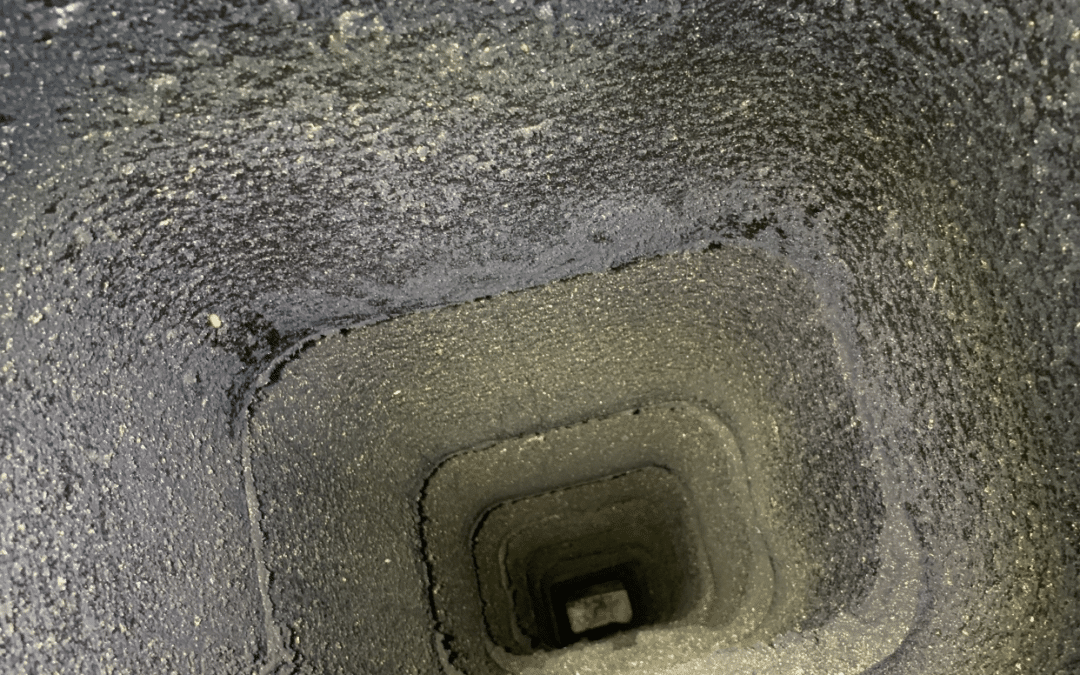
Even the most perfectly burning fire leaves behind a trace. As wood burns, it releases gases, smoke, and particulate matter that travel up your flue. As these byproducts cool near the top, they condense and stick to the masonry or liner, forming a substance called creosote.
Creosote is highly porous and notoriously smelly. It has an acrid, sharp, barbecue-like odor. During the winter, the upward draft keeps this smell out of your house. But once summer hits, and the air reverses course, that creosote acts like a massive air freshener (or rather, an air foul-er) planted directly in your home’s ventilation path. Without regular professional sweeping services, this buildup continues to layer, magnifying the smell year after year.
Culprit 3: Summer Humidity and Moisture
If you have ever noticed that a wet dog smells much stronger than a dry dog, you already understand how moisture affects odor. Water amplifies smell.
Creosote and soot are essentially sponges. When the high humidity of summer air is pulled down your flue, the creosote absorbs the moisture in the air. Furthermore, if you are missing a protective cap on your flue, sudden summer rainstorms can dump actual rainwater directly into the system. Wet soot and damp creosote produce a dramatically stronger, mustier campfire scent than dry buildup. Heat bakes the moisture into the soot, releasing an incredibly pungent aroma into your household.
How to Fix the Summer Fireplace Smell for Good
The good news is that you do not have to live with a smelly living room until winter returns. The campfire odor is entirely treatable, provided you address both the source of the smell and the airflow dynamics bringing it into your home. Here is our expert guide to restoring a fresh-smelling hearth.
1. Invest in a Top-Sealing Damper
If there is a silver bullet for summer fireplace smells, it is the top-sealing damper.
Most older fireplaces feature a traditional throat damper, which is located just above the firebox (the area where you burn the wood). Throat dampers are essentially a metal plate resting on a metal frame. Metal-on-metal construction does not create an airtight seal. Even when “closed,” a throat damper is notoriously leaky, allowing the negative pressure to easily pull smells right past the metal plate.
A top-sealing damper, on the other hand, is installed at the very top of your chimney structure. It functions similarly to a trap door with a heavy-duty rubber gasket. When you close it via a steel cable located in your firebox, the rubber gasket creates a nearly 100% airtight seal. Not only does this immediately block the smelly air from traveling down the flue, but it also seals out humidity, rain, and pests, while simultaneously saving you serious money on your summer air conditioning bills.
2. Schedule Professional Flue Sweeping Services
You cannot smell soot if it isn’t there! The most foundational step in eliminating odors is removing the source. Hiring a certified professional for routine ash removal and flue sweeping will clear out the porous, odor-absorbing creosote that lines the walls of your venting system.
At Southern Chimney Sweep, our certified technicians use specialized brushes, high-powered vacuums, and professional-grade techniques to remove stubborn creosote. Regular sweeping does more than just fix the smell; it is a critical safety measure that reduces the risk of dangerous flue fires when you begin burning wood again in the fall.
3. Correct Your Home’s Air Pressure
Since negative air pressure pulls the smell inward, mitigating that pressure can greatly reduce the odor.
- A/C Placement: Ensure your air conditioning return vents are not closed off or blocked.
- Exhaust Fans: Be mindful of running high-powered exhaust fans (like kitchen range hoods or bathroom vents) for extended periods, as these actively suck air out of the house, forcing the chimney to pull outside air in to compensate.
- Crack a Window: If the smell is severe on a particular day, try slightly cracking a window on the upper floor of your home to give the house an alternative source of air intake.
4. Utilize Commercial Fireplace Deodorizers
Once your flue has been properly serviced by a professional, you can tackle any lingering, stubborn scents with specialized fireplace deodorizers. These commercial-grade granular absorbents can be placed in a small container inside your firebox. Instead of just masking the scent like a standard room spray, they actively absorb and neutralize the damp, smoky odors.
5. Ensure Your Crown and Cap are Watertight
Remember, moisture equals more odor. If the concrete crown at the top of your masonry is cracked, or if your protective rain cap is missing or damaged, rain is getting inside. Having a professional evaluate your system to patch any masonry leaks and install a high-quality, weather-resistant cap will keep the interior of your system bone-dry, dramatically reducing the strength of any soot smells.
Quick Diagnostics: Find Your Fix
Use this quick reference table to determine the likely cause of your hearth odor and the appropriate solution.
| What You Are Experiencing | The Most Likely Cause | The Permanent Solution |
| Pungent, smoky smell immediately after turning on A/C or exhaust fans | The Stack Effect (Negative Pressure) | Install a top-sealing damper to create an airtight seal at the top of the flue. |
| Musty, wet campfire smell after a summer rainstorm | Missing cap, cracked crown, or lack of water protection | Professional installation of a rain cap and masonry waterproofing. |
| A constant, lingering barbecue-like odor no matter the weather | Heavy creosote and soot accumulation | Schedule professional soot removal and comprehensive flue sweeping. |
| Smell persists even with a closed throat damper | Inefficient metal-on-metal throat damper seal | Upgrade to a top-sealing damper with a rubber weather-seal gasket. |
Why Timely Attention Matters
Ignoring a smelly fireplace is not just a nuisance to your nose—it can be a sign of deeper, more costly problems. Heavy odors usually indicate heavy creosote, which is highly combustible. Furthermore, if water is the catalyst for the smell, that same water is likely causing unseen damage to your mortar joints, masonry, and interior firebox walls. Taking care of the smell during the summer ensures that your system is safe, structurally sound, and fully ready to perform when the first freeze of winter arrives.
Do not let the ghost of winter fires ruin your fresh summer space. Trust the experts at Southern Chimney Sweep to evaluate your system, diagnose the pressure issues, and provide long-lasting, odor-eliminating solutions.
Frequently Asked Questions (FAQ)
1. Is a campfire smell from my fireplace dangerous to my health?
While the smell itself is generally more of a nuisance than a direct health hazard, it can be problematic for individuals with asthma, allergies, or chronic respiratory conditions. However, the cause of the smell—creosote buildup—is definitely dangerous. Creosote is highly flammable, and allowing it to sit and accumulate in your venting system drastically increases your risk of a hazardous home fire during the winter months.
2. Can I just use air fresheners, candles, or room sprays to hide the smell?
You can, but it will be a losing battle. Air fresheners only mask the odor temporarily; they do not remove the source. Because the negative air pressure in your home acts as a continuous vacuum, pulling hot air over the creosote 24/7, the campfire smell will quickly overpower standard room sprays. To actually eliminate the problem, you must remove the soot via professional sweeping and seal the airflow with a top-mounted damper.
3. Will closing my throat damper tightly stop the odor?
Unfortunately, no. Traditional throat dampers (located just above the firebox) are made of cast iron or steel. Because they are metal resting on metal, they cannot create an airtight seal. Even when fully closed, air, moisture, and smells can easily slip past the edges of the damper plate. This is why top-sealing dampers, which utilize a rubber gasket, are recommended for comprehensive odor control.
4. How often should I get professional fireplace maintenance to prevent smells?
The National Fire Protection Association (NFPA) recommends that venting systems, flues, and vents be evaluated by a professional at least once a year. If you burn wood frequently during the winter, you should ideally have a professional sweeping service performed annually. Routine removal of ash and creosote is the single best preventative measure against summer odors.
5. Does running my air conditioning make the smell worse?
Yes, it often does. Air conditioning cools the air inside your home, making it dense and heavy. As this cold air sinks to the lowest levels of your house, it creates a vacuum (negative pressure) at the top of your house. To replace the displaced air, your house sucks outside air directly down the chimney, pulling the pungent scent of baked soot and creosote right into your living space.